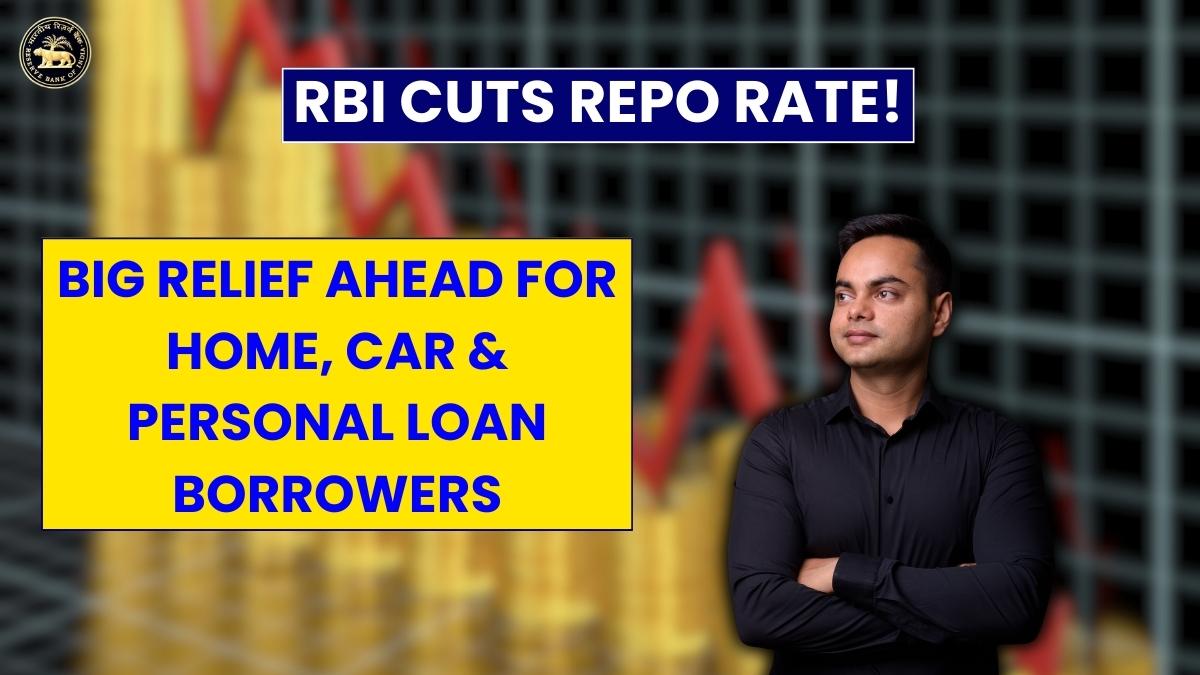
The RBI has officially cut the repo rate again in December 2025 and this move brings meaningful relief to millions of loan borrowers. Whether you’re paying off a home loan, planning to buy a car, or thinking about a personal loan, this rate cut can reduce your EMIs or help you close your loan faster. Here’s a simple, mobile-friendly breakdown of what the new rate means, why RBI reduced it, and how you can make the most of it.
What Is the Repo Rate and Why This December Cut Matters
The repo rate is the interest rate at which the Reserve Bank of India (RBI) lends short-term funds to commercial banks. When the RBI reduces this rate, banks can borrow money at a lower cost.

If banks pass on this benefit, interest rates on home, car, and personal loans come down. That can mean lower EMIs or reduced loan tenure for borrowers.
When the Latest Repo Rate Cut Happened
On 5 December 2025, the RBI’s Monetary Policy Committee cut the repo rate by 25 basis points, reducing it from 5.50% to 5.25%.
This was the fourth rate cut in 2025, bringing the total reduction for the year to 125 basis points. RBI also revised inflation forecasts downward and raised the GDP growth outlook for FY26 to 7.3%, signalling stable economic conditions.

How This Rate Cut Helps Borrowers
If you have a floating-rate home loan, car loan, or personal loan, this reduction can benefit you directly.
- Your bank may drop its lending rate, lowering your EMI.
- You may also choose to keep the EMI unchanged and reduce your loan tenure to save more interest long-term.
- A ₹30 lakh home loan over 20 years could see an EMI drop of around ₹1,100–₹1,200 depending on transmission.
What Borrowers Should Check Before Expecting EMI Relief
| What to Check | Why It Matters |
|---|---|
| Loan type (floating vs fixed) | Only floating rates typically fall after repo cuts. |
| Bank’s transmission speed | Some banks cut rates quickly, others wait. |
| Reset dates | Your loan rate may change only on scheduled reset days. |
| EMI vs tenure strategy | Lower EMI improves cash flow; same EMI reduces tenure and interest. |
Many borrowers assume their EMI will drop instantly, but the timing depends on your bank and loan agreement.
Why RBI Cut the Repo Rate in December 2025
The December cut was driven by:

- Cooling inflation, allowing room for policy easing
- Strong growth outlook for FY26
- A stable macro environment supporting lower borrowing costs
RBI saw this as the right moment to support economic activity without fuelling inflation.
Who Benefits the Most
- Borrowers with floating-rate home loans
- First-time homebuyers
- New borrowers planning to take a car or personal loan
- Borrowers planning to refinance old, high-interest loans
Lower borrowing costs may also boost housing demand and the real-estate sector.
What This Means for You
The repo rate is now 5.25%, and if banks pass on the benefit, EMIs may fall or loan tenures may reduce. This is a good time to review existing loans, plan new credit, or consider refinancing.

Just remember to check with your bank the benefit is not always automatic.
FAQ
When will my EMI reduce?
It depends on your bank’s transmission and the reset date for your floating-rate loan.
Which loans benefit from the rate cut?
Floating-rate home, car, and personal loans typically benefit. Fixed-rate loans usually do not.
Should I reduce EMI or loan tenure?
If you want better cash flow, choose lower EMI. If you want bigger savings, keep EMI same and reduce tenure.
Why has my EMI not changed yet?
Your bank may not have transmitted the cut yet, or your reset date is pending.
Will FD rates fall too?
Yes. Banks often reduce fixed deposit rates after repo rate cuts.